Welcome to UpNorth Agarwood Nursery! Agarwood seedlings available from ₱650. For purchases, enquiries and nursery visits, please contact us through our Facebook page.

The Story of Agarwood: Nature’s Most Precious Fragrance
Discover the Mystery of Agarwood.
7/18/20253 min read
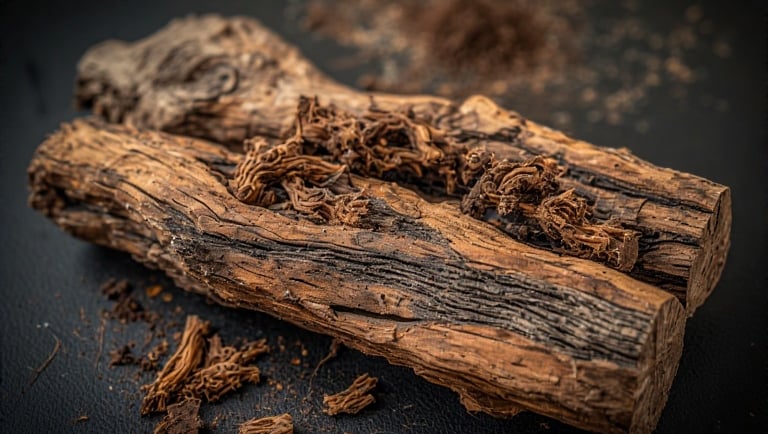
Agarwood, also known as oud, gaharu, or aloeswood, is one of the most valuable and rare natural resources in the world. Prized for its rich, complex aroma, agarwood has been used for centuries in perfumery, spiritual practices, and traditional medicine. Its deep cultural, religious, and economic significance stretches across continents, from the forests of Southeast Asia to the luxury fragrance houses of the Middle East and Europe.
But what makes this wood so special? And how is it formed?
What Is Agarwood?
Agarwood is the resin-embedded heartwood of certain species of trees in the Aquilaria and Gyrinops genera. These trees are native to tropical forests in countries like India, Indonesia, Malaysia, Vietnam, Thailand, Cambodia, and Laos.
Interestingly, agarwood does not occur naturally in every tree. In fact, only a small percentage of Aquilaria trees produce it. The formation of agarwood is the result of a rare and complex natural defense process.
How Is Agarwood Formed?
The process begins when the tree is injured or infected, often by a specific type of fungus (such as Phialophora parasitica). The tree responds by producing a dark, aromatic resin to protect itself from the infection. This resin slowly saturates the surrounding wood, turning it from pale and odorless to dark, dense, and richly fragrant. This resinous wood is what we know as agarwood.
This transformation can take years or even decades, depending on environmental conditions and the health of the tree.
Harvesting Agarwood
Harvesting agarwood traditionally involved locating wild Aquilaria trees and inspecting them for resin-rich heartwood. However, this practice led to overharvesting and the decline of wild populations. In fact, Aquilaria species are now listed as endangered in many regions and protected under the CITES (Convention on International Trade in Endangered Species) agreement.
To meet demand sustainably, modern agarwood production often involves plantation cultivation and the use of artificial inoculation methods. These controlled infections trigger the tree’s natural defense response and allow producers to harvest agarwood within a shorter time frame.
Types of Agarwood Products
Agarwood is incredibly versatile and is used in many different forms:
Oud Oil (Agarwood Oil): A highly concentrated essential oil extracted from resinous wood. It is one of the most expensive oils in the world, often used in high-end perfumes.
Incense and Chips: Agarwood is burned during meditation, prayer, or special ceremonies in many cultures, especially in the Middle East and East Asia.
Beads and Carvings: Resin-rich agarwood is sometimes carved into prayer beads, jewelry, or statues due to its scent and symbolic value.
Medicinal Uses: In traditional Chinese and Ayurvedic medicine, agarwood is believed to have calming, digestive, and detoxifying properties.
Cultural and Spiritual Significance
Agarwood has deep roots in spiritual traditions. It is mentioned in ancient texts like the Vedas, the Qur'an, and Buddhist scriptures. In Hindu rituals, agarwood is offered to deities. In Islamic culture, it is burned during religious gatherings and used as perfume. In Japan and China, it plays a key role in incense ceremonies and meditation practices.
Its scent is often described as woody, sweet, balsamic, spicy, and complex, with a depth that unfolds over time. No two pieces of agarwood smell exactly the same, making each one unique and treasured.
Challenges and Conservation Efforts
Due to its high value, agarwood has become a target for illegal logging and unsustainable harvesting. As a result, conservationists and governments are working to protect wild Aquilaria forests while promoting sustainable agarwood farming.
Efforts include:
CITES regulations to control international trade.
Research into artificial inoculation to increase resin production without harming trees.
Community-based plantations that provide income for local farmers while preserving forests.
Conclusion
Agarwood is more than just a fragrant wood—it’s a symbol of rarity, spirituality, and natural beauty. From its mysterious formation deep inside tropical trees to its place in the world’s most luxurious perfumes and sacred rituals, agarwood continues to fascinate and inspire.
As demand grows, it becomes increasingly important to support sustainable and ethical sourcing to ensure this natural treasure remains available for generations to come.
Customer Care
Contacts
Collection & Purchase Information